
Past Series
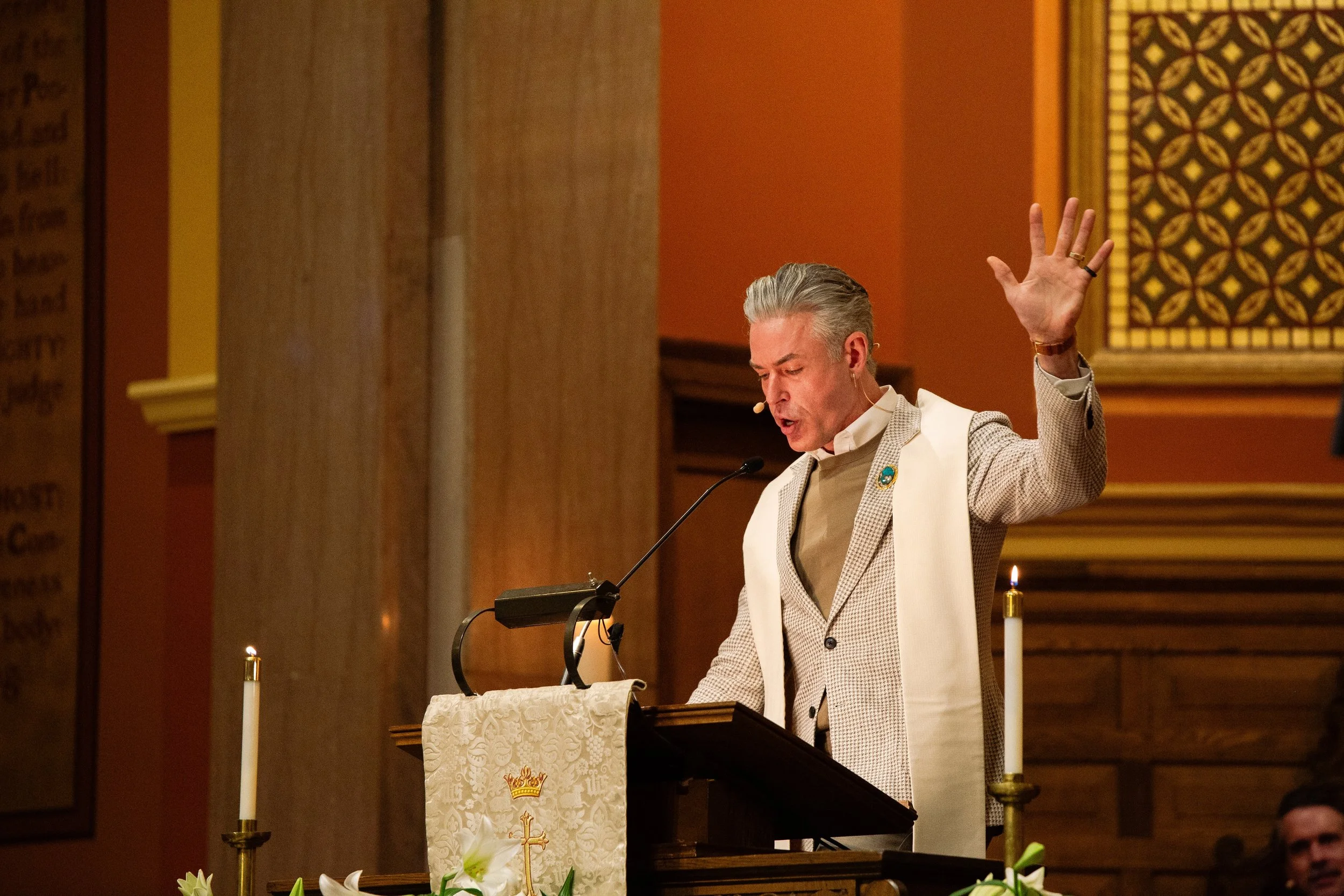
West End Church preaches and teaches responsively—we program according to the needs of the moment, and guide our sermons and studies generally by the Revised Common Lectionary. Still, on occasion we present thematic sermon series, particularly around the liturgical season of Lent. If you’d like to get a feel for what kind of preaching, teaching, and learning goes on here at West End Church, please peruse our sermon series archive below.
To view the latest sermons as part of our current worship, please click here. To subscribe to our sermon archive and to read full transcripts on Apple Podcasts, please click here.
Lent 2026: Asking More Faithful Questions
In this Lenten sermon series, we wrestled with and gleaned meaning from Scripture’s great unanswered questions. Using Jesus’ directive to “Follow Me,” we asked the questions we needed to better understand in order to do so. Weekly sermons were supported by reflective “field guides” and weekly Adult Bible studies prepared by our educational staff.
-
In this first sermon, Rev. William Critzman introduces the series with a very simple proposition: When to follow? The answer is: “Now.”
The week’s “field guide” encouraged reflection on how waiting for the “right” moment is its own type of trap.
-
In this second sermon, Rev. Critzman uses the Gospel of John to contemplate the deeply personal process of discernment.
In the week’s field guide, congregants were asked to turn inward and begin the process of outlining what would make “a life abundant.”
-
For the third Sunday in Lent, Rev. Critzman preached on our tendency to deflect responsibility…or to believe in our own abilities.
In the weekly field guide, congregants were asked to continue the kind of self-reflection that might help them break established patterns.
-
Our fourth sermon comes from Matt Puckett, who points out that Jesus partners with people in his miracle-making, encouraging us to live a more active faith.
Congregants were invited to use the weekly field guide to think about which ways they might be specifically called to use their gifts to serve God.
-
In this final sermon of the series, Matt Puckett used the story of Lazarus to illustrate Jesus’ transformational grace and to invite us into a sense of deep presence and wonder.
The accompanying field guide asked congregants to do one final self-reflection to see what routines and structures might blind us to being open to wonder and mystery.
Lent 2025: Technology and Discipleship
West End tackled a faithful use of technology in 2025–long before data centers dominated the zeitgeist. In this series, our ministry team encouraged us to be thoughtful and intentional around our use of technology–for us to use it, rather than the other way around. Weekly “field guides” and Lenten “Thoughts of the Week” from our educational staff encouraged discussion and reflection.
-
Rev. William Critzman welcomes us to Lent by encouraging congregants to “pack our bags,” keeping only what is essential for the journey. This week, he examines the news and whether our constant consumption of news is helpful for our mental or spiritual wellbeing.
The week’s field guide covered the basics of media literacy and commonsense steps to reduce news consumption; our digital Lenten “thought of the week” extended a challenge of a “news fast” to invite a “re-set” going forward.
-
In this second week of Lent, Rev. Critzman encouraged congregants to prioritize face-to-face connection…even during the sermon.
The week’s field guide continued that critical view of social media, outlining ways to use it to reinforce meaningful relationships. And the Lenten “Thought of the Week” focused on the concept of joy: if social media isn’t sowing it, it’s time to put it down.
-
This week, Rev. Critzman commemorated the fifth anniversary of Covid by discussing the ways in which e-commerce changed our lives, and how we might break the cycle of mindless consumption.
The weekly field guide gave a series of tips and tricks on shopping more sustainably, and the digital “Thought for the Week” asked readers to notice when consumption felt automatic rather than intentional.
-
-